The internet you browse every day is just the surface. Below it, there is a hidden layer that most people never see. At the center of that layer is the dark web network. You can’t find this part of the internet using Google or Bing. You need special tools, specific software, and a basic understanding of how encrypted routing works.
Many people hear the dark web term and immediately think of crime. But the reality is more layered. A dark web network is simply a set of websites and services that run on an encrypted, anonymized setup. Yes, some of it is used for illegal activity. But journalists, researchers, privacy advocates, and even regular citizens living under restrictive governments use it too.
In this article, we will break down what a dark web network actually is, its types, the security risks tied to it, and who uses it.
What Is a Dark Web Network?
A dark web network is a collection of websites that operate outside the reach of standard search engines. These sites use encryption and routing technology to hide the identity and location of both the server and the visitor. To land on a website of this network requires specific software such as Tor (The Onion Router) or I2P to access.
The main idea behind any dark net network is anonymity. Traffic is bounced through multiple relay points across the globe. Each one peeling back a layer of encryption, just like peeling an onion.
And that’s why the logo of Tor is an onion. And sometimes the hidden internet is called the “onion network.” No single relay point knows both where the traffic begins and where it is going. All this makes tracing users extremely difficult.
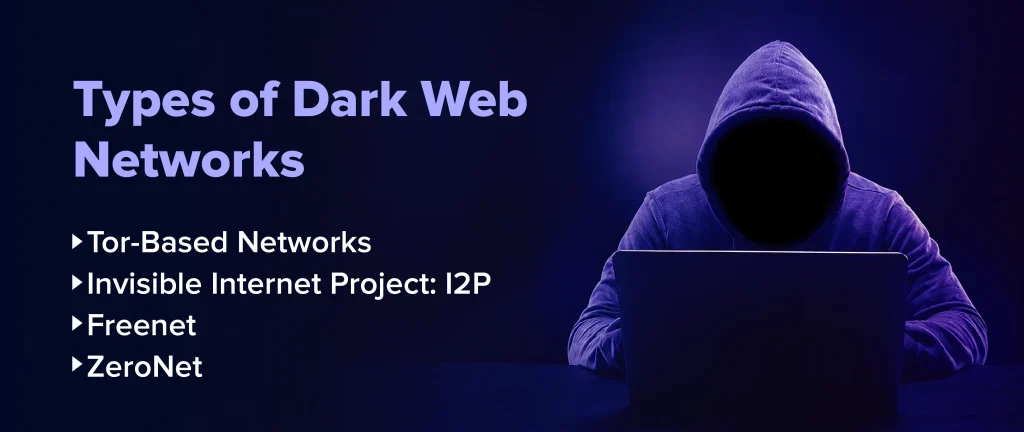
4 Types of Dark Web Networks
Not all hidden networks work the same way. There are a few different types of dark network setups.
1. Tor-Based Networks
This is the most widely known type of dark web network. Tor browser routes traffic through volunteer-run servers scattered around the world, encrypting data at every hop. Websites on this network typically end in “.onion”
2. Invisible Internet Project: I2P
I2P is another dark web network built for anonymous communication. But it focuses more on peer-to-peer traffic rather than just browsing websites. It is used for anonymous messaging, file sharing, and hosting hidden services.
3. Freenet
Freenet is a decentralized dark net network. It is used for publishing content in a censorship-resistant way. Instead of hosting content on a single server, files are distributed across many computers, making it very hard to take down.
4. ZeroNet
ZeroNet combines features of a dark network with blockchain-style technology. The hosted sites on this network don’t depend on a single server. They are copied across users who visit them, keeping the content alive even if the original creator goes offline.
Risks and Security Concerns of Dark Web Network
There are valid uses for a dark web network, but it also comes with real risks that anyone exploring this space should know.
Malware and infected downloads:
Many hidden sites distribute files that contain malware. Downloading anything on a dark web network is risky because there are no regulations and no verification procedures.
Scams and fraud:
Scams are very common because transactions are largely anonymous and often involve cryptocurrency. Fake vendors, fake escrow services, and phishing pages are everywhere.
Illegal markets:
Some parts of a dark web network host marketplaces selling stolen data, drugs, weapons, or counterfeit goods. Visiting these pages can expose you to legal scrutiny in some regions.
Law enforcement monitoring:
Government agencies and cybersecurity companies actively monitor the activities on the dark web network. The dark web network is designed for anonymity, but mistakes in operational security have led to the identification of many users.
Exposure to disturbing content:
Unlike the regular internet, there is no content moderation on most of the dark web network. You can accidentally see graphic, illegal, or disturbing material without warning.
Data breaches and stolen credentials:
Most of the dark web network activity revolves around buying and selling leaked passwords, credit card numbers, and personal information from data breaches.
Who Uses Dark Web Networks?
Do you think that only criminals use the dark web? Well, you are wrong. Illegal activity happens there, but the user base is actually quite varied.
- Journalists and whistleblowers use a dark web network to communicate securely and share sensitive information without exposing their identity or sources.
- Activists and citizens in oppressive regimes rely on this kind of network to access blocked information or organize safely without government surveillance.
- Privacy-focused individuals use it simply because they don’t want their browsing habits tracked by advertisers or governments.
- Cybersecurity researchers monitor dark web network forums and marketplaces to track emerging threats, leaked data, and hacking trends.
- Law enforcement agencies operate within these networks undercover to investigate criminal activity and gather intelligence.
- Criminal actors unfortunately do exist here too, using the anonymity of a dark web network to sell illegal goods, stolen data, or run scams.
This mix of users shows that a dark web network itself is neutral technology. It’s a tool, and like most tools, its impact depends entirely on the intent of the person using it.
Why You Should Know the Basics of Dark Web Network
Even if you never visit a dark web network, understanding how it works really matters. Data breaches happen continuously, and stolen data from major companies often ends up for sale on these platforms. Knowing that your email or password could appear on a dark web network after a breach is a good reason to use unique passwords and enable 2FA: two-factor authentication everywhere possible.
Businesses also benefit from understanding this space. Many cybersecurity firms now offer “dark web monitoring” services that scan hidden dark web markets and forums to find leaked credentials or customer data of a company. It helps organizations respond to breaches before the damage spreads further.
How to Stay Safe If You Explore a Dark Web Network
- Always use updated, reputable software like the official Tor Browser.
- Never enter personal information, even on sites that seem legitimate.
- Avoid downloading files unless necessary.
- Use a reliable VPN as an added layer of protection.
- Never use your real email, name, or any identifying details.
- Stay away from marketplaces or forums promoting illegal activity.
NOTE: These steps won’t make browsing a dark web network completely risk-free, but they significantly reduce your exposure to scams, malware, and legal trouble.
FAQs
Q: Why does the dark web exist?
Ans: The dark web exists to offer anonymity, privacy, and access to restricted data.
Q: Is accessing a dark web network illegal?
Ans: No, simply accessing a dark web network is not illegal in most countries. What you do once you’re there, such as buying illegal goods, is what can create legal trouble.
Q: Can I be tracked while using a dark web network?
Ans: Tracking is much harder due to the layered encryption, but it’s not impossible. Poor security habits, like logging into personal accounts, can expose your identity.
Q: What is the difference between the deep web and a dark net network?
Ans: The deep web includes any content not indexed by search engines, like private databases. A dark web network is a smaller, intentionally hidden part of the deep web requiring special software to access.
Final Thoughts
A dark web network is neither purely good nor purely bad. It is a technology built around anonymity, and how it’s used depends on the person behind the screen. From encrypted communication for journalists to illegal marketplaces for stolen data, the range of activity happening on a dark net network is wide and constantly evolving.
Understanding the basics, including the types of networks, the risks involved, and who typically uses them, gives you a clearer, more realistic picture of this hidden part of the internet. Whether you’re researching for cybersecurity purposes, curious about online privacy, or just want to understand how a dark web network fits into the bigger picture of internet infrastructure, staying informed is always the smartest first step.